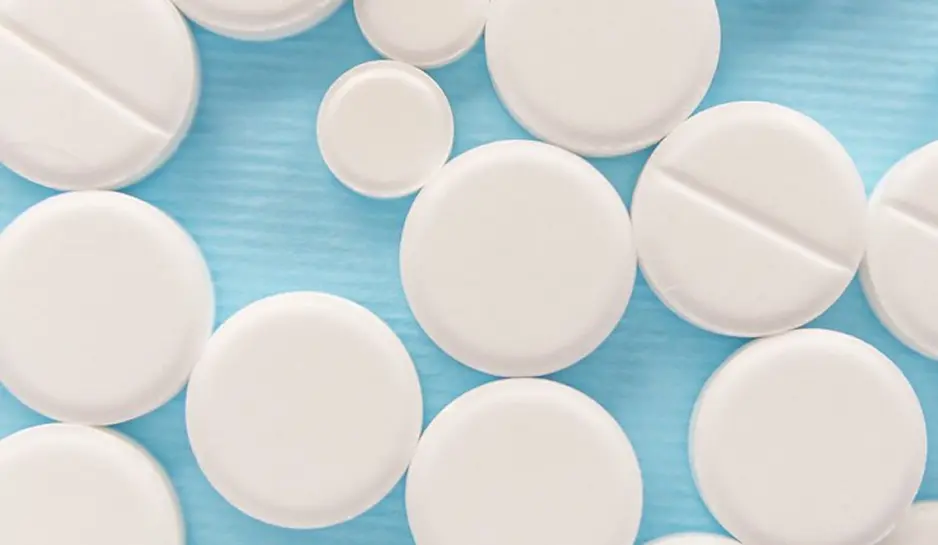
Doreta: composition and pharmaceutical form
Doreta is a combination medicine in film-coated tablets. One tablet contains 37.5 mg or 75 mg of tramadol hydrochloride (equivalent to 32.94 mg or 65.88 mg of tramadol) and, respectively, 325 mg or 650 mg of paracetamol.
The two strengths differ not only in potency but also in the rhythm of dosing: with the 37.5/325 mg form the interval between doses is at least 6 hours, and with the 75/650 mg form at least 12. The tablets are swallowed whole with enough liquid; they must not be split or chewed.
How Doreta works
The exact mechanism of the analgesic action of paracetamol is unknown and may involve both a central and a peripheral component. Tramadol in this combination acts as an agonist of the opioid receptors, so two different mechanisms work on the pain at once.
On the World Health Organization analgesic ladder the medicine sits on the second step, between simple analgesics and strong opioids. Hence the rule: a doctor prescribes it, and prescribes it when an ordinary painkiller is no longer enough.
Indications
Doreta is indicated for the symptomatic treatment of moderate and severe pain.
Its use is limited to patients who, with such pain, need precisely the combination of tramadol and paracetamol. If the pain is relieved by one of the components on its own, the combination product is not needed: it is not a stronger version of an ordinary analgesic but a medicine with an opioid component and all the risks that follow.
Method of use and dosage
The dose is chosen individually according to the intensity of the pain and the patient's sensitivity, using the lowest effective one. The medicine is used in adults and adolescents from the age of 12 and for no longer than is unconditionally necessary.
| Form or situation | Dosage |
|---|---|
| 37.5/325 mg | starting dose of 2 tablets; more may be added if needed, not exceeding 8 tablets a day; interval between doses at least 6 hours |
| 75/650 mg | starting dose of 1–2 tablets; a maximum of 4 tablets a day; interval at least 12 hours |
| Daily ceiling by substance | 300 mg of tramadol hydrochloride and 2600 mg of paracetamol |
| Children under 12 | not used: efficacy and safety have not been established |
| Over 75 | elimination of tramadol slows down — the intervals are lengthened if needed |
| Renal or hepatic impairment | the intervals are lengthened; in severe hepatic impairment and with creatinine clearance below 10 ml/min the medicine is not used |
If the nature or severity of the illness calls for repeated or prolonged use, the patient's condition is monitored regularly — with breaks in treatment where possible — to judge whether it should continue. A long course is better ended by lowering the dose gradually: that is how withdrawal symptoms are avoided.
Contraindications
The restrictions come from two different substances: the opioid part determines the prohibitions on the nervous system side and paracetamol those on the liver side.
- hypersensitivity to the active substances or to any excipient;
- acute poisoning with alcohol, hypnotics, centrally acting analgesics, opioids or psychotropic agents;
- use of MAO inhibitors, and also the first 2 weeks after such treatment ends;
- severe impairment of liver function;
- epilepsy not adequately controlled by medicines.
Special warnings and precautions
The main everyday danger of the medicine is unintentional paracetamol overdose. The recommended dose must not be exceeded and other products containing paracetamol or tramadol, including over-the-counter ones, must not be taken at the same time without consulting a doctor. The risk of paracetamol overdose is higher in people with alcoholic liver disease without cirrhosis.
Seizures and dependence
Seizures on tramadol have been noted in patients predisposed to them and in those taking medicines that lower the seizure threshold — selective serotonin reuptake inhibitors, tricyclic antidepressants, antipsychotics, central analgesics, local anaesthetics. People with controlled epilepsy or a predisposition to seizures should receive the medicine only in exceptional circumstances, and the risk grows if the maximum dose is exceeded. Even at therapeutic doses tolerance and physical or psychological dependence may develop, so the clinical need for analgesia is reviewed regularly. Patients with past opioid dependence or medicine abuse are prescribed the product only as a short course and under medical supervision. Tramadol is not suitable as substitution therapy in opioid dependence: it does not relieve morphine withdrawal symptoms, even though it is an opioid receptor agonist.
Other warnings
- it is not used in severe impairment of kidney function (creatinine clearance below 10 ml/min) or of the liver;
- it is not recommended in severe respiratory disorders;
- caution is needed after head injuries, in biliary tract disease, in shock, with disturbances of consciousness of unclear origin and with raised intracranial pressure;
- withdrawal symptoms resembling opioid ones are possible even at therapeutic doses and on a short course — a gradual dose reduction prevents them;
- in some patients paracetamol overdose causes toxic liver damage;
- in light general anaesthesia tramadol is not indicated: in a study with enflurane and nitrous oxide it increased the risk of awareness during surgery;
- drowsiness and dizziness are intensified by alcohol and by central nervous system depressants;
- with such symptoms you must not drive or operate machinery.
Drug interactions
Categorically incompatible with the medicine are MAO inhibitors — non-selective, selective MAO-A and MAO-B: the combination threatens serotonin syndrome with diarrhoea, tachycardia, profuse sweating, tremor and disorientation up to coma. After recent use of MAO inhibitors, 2 weeks are allowed before tramadol therapy begins. Not recommended are: alcohol, which enhances the sedative effect; carbamazepine and other enzyme inducers, which lower the concentration of tramadol and its effect; opioid analgesics with mixed agonist-antagonist action — buprenorphine, nalbuphine, pentazocine — which weaken the analgesia and threaten a withdrawal syndrome.
Caution is required with serotonergic agents: selective serotonin reuptake inhibitors, serotonin and noradrenaline reuptake inhibitors, tricyclic antidepressants, mirtazapine — they carry both a risk of seizures and a risk of serotonin toxicity. Serotonin syndrome may be suspected from spontaneous seizures, nystagmus with agitation or profuse sweating, tremor with heightened reflexes, and muscle rigidity with a temperature above 38 °C. Withdrawing the serotonergic agents usually improves the condition quickly. Other opioids, benzodiazepines and barbiturates raise the risk of respiratory depression, fatal in overdose; the same applies to hypnotics, sedating antidepressants and antihistamines, neuroleptics, centrally acting antihypertensives, thalidomide and baclofen. With coumarin derivatives, for example warfarin, cases of a rise in INR with serious bleeding and petechiae have been described.
Pregnancy and breastfeeding
Since the medicine contains tramadol, it is not used during pregnancy. Epidemiological studies have found no harmful effect of paracetamol at the recommended doses, but data on the safety of tramadol in pregnant women are insufficient. Tramadol given before or during labour does not affect uterine contractility, though in newborns it may alter the respiratory rate, usually without clinical significance. Prolonged use during pregnancy leads to a withdrawal syndrome in the newborn as a manifestation of dependence.
During breastfeeding the medicine is acceptable no more than once; in other cases feeding is stopped for the duration of tramadol treatment. Paracetamol passes into milk in amounts of no clinical significance and is not contraindicated while breastfeeding. With tramadol it is more complex: about 0.1% of the dose taken by the mother reaches the milk, which with an intake of up to 400 mg a day means roughly 3% of the maternal weight-adjusted dose for the child. After a single dose of tramadol, interrupting feeding is usually not required.
Adverse effects
In clinical trials of the combination the most frequent were nausea, dizziness and drowsiness — they were seen in more than 10% of patients.
- very common: nausea, dizziness, drowsiness;
- common: headache, tremor, vomiting, constipation, dry mouth, diarrhoea, abdominal pain, dyspepsia, flatulence, increased sweating, itching;
- common in the psychic sphere: confusion, mood swings, restlessness, nervousness, euphoria, sleep disorders;
- uncommon: involuntary muscle twitching, paraesthesia, tinnitus, palpitations, tachycardia, arrhythmia, raised blood pressure, hot flushes, breathlessness;
- uncommon, other: depression, hallucinations, nightmares, amnesia, dysphagia, tarry stools, albuminuria, difficulty passing urine or retention, chills, chest pain, increased aminotransferase activity;
- rare: ataxia, seizures, fainting, blurred vision, drug dependence;
- rare, linked to tramadol: allergic reactions with breathlessness, bronchospasm, wheezing and angioedema, anaphylaxis, respiratory depression, muscle weakness, orthostatic hypotension, bradycardia, collapse;
- very rare: abuse of the medicine, severe skin reactions, changes in blood composition including thrombocytopenia and agranulocytosis.
Withdrawal symptoms repeat the opioid pattern: agitation, restlessness, nervousness, insomnia, hyperkinesia, tremor and gastrointestinal disturbances. Very rarely, after abrupt withdrawal, panic attacks, severe anxiety, hallucinations, paraesthesia and tinnitus were observed.
Overdose
In an overdose, symptoms of poisoning with tramadol, with paracetamol or with both substances at once are possible. Tramadol gives a picture typical of opioids: constricted pupils, vomiting, vascular collapse, disturbances of consciousness up to coma, seizures and respiratory depression up to arrest. Paracetamol shows itself in the first 24 hours as pallor, nausea, vomiting, loss of appetite and abdominal pain, while signs of liver damage appear after 12–48 hours; in adults it is possible with the intake of 7.5–10 g or more and in severe cases leads to encephalopathy, coma and death.
The patient is taken to hospital immediately, even if there are no obvious early symptoms. Breathing and circulation are supported, blood is taken as early as possible for paracetamol and tramadol concentrations and liver tests, which are repeated every 24 hours. Gastric lavage is indicated for an adult or adolescent who has taken about 7.5 g of paracetamol or more in the last 4 hours. The paracetamol concentration is measured 4 hours after intake so the risk can be assessed on the nomogram. The antidote for respiratory depression is naloxone, diazepam is used for seizures, and for paracetamol poisoning intravenous N-acetylcysteine (best if started within the first 8 hours, but it should be given later too) or oral methionine. Haemodialysis and haemofiltration remove tramadol only minimally and are of no use for detoxification.
How to get a prescription for Doreta online
Doreta is a prescription-only medicine: it contains an opioid component, so the doctor assesses not only the nature of the pain but also the risk of dependence, seizures and drug interactions. During the online consultation the doctor will go through your situation and clarify the medicines you take and the state of your liver and kidneys.
If the medicine is suitable, the doctor will issue an electronic prescription, choose the form and the interval between doses and explain how long it may be taken and how to finish the course properly.